Ingredients
Method
- Sauté the meat. Turn the Instant Pot to Sauté (High). Add the oil. Once it is hot, brown the beef cubes in batches. Do not overcrowd the pot. Remove the beef and set it aside.
- Sauté the aromatics. Add the chopped onions to the empty pot and sauté for 3 to 4 minutes until translucent. Add the minced garlic and the tomato paste. Stir constantly for 1 minute to cook out the raw tomato flavor.
- Deglaze. Pour in the red wine (or a splash of broth). Use a wooden spoon to scrape up the browned bits stuck to the bottom of the pot. This step matters: it prevents the 'Burn' message on the Instant Pot.
- Combine. Turn off the Sauté function. Add the beef back into the pot. Add the red bell pepper, mushrooms and potatoes.
- Season. Sprinkle the sweet paprika, smoked paprika (if using), caraway seeds, marjoram, salt and black pepper over the ingredients. Add the bay leaf.
- Add the liquid. Pour in the beef broth. Stir gently to combine, making sure the potatoes and meat are mostly submerged.
- Pressure cook. Close the lid and set the valve to Sealing. Select Pressure Cook (or Manual) on High Pressure for 30 minutes.
- Natural Release. When the timer beeps, let the pressure release naturally for at least 10 minutes (Natural Release). Then carefully turn the valve to Venting to release any remaining steam.
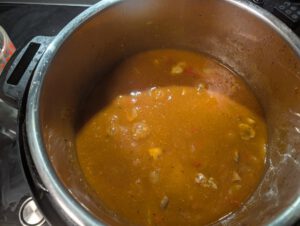
- Thicken. Open the lid and remove the bay leaf. In a small bowl, whisk the cornstarch with the cold water to make a slurry (a smooth mix of starch and cold liquid, so it does not clump). Turn the Instant Pot back to Sauté. Stir the slurry into the bubbling goulash and let it simmer for 2 to 3 minutes until the sauce thickens.
- Cook the pasta in its own pot per the package directions, in fresh water and with a clean colander, so it does not come into contact with gluten.
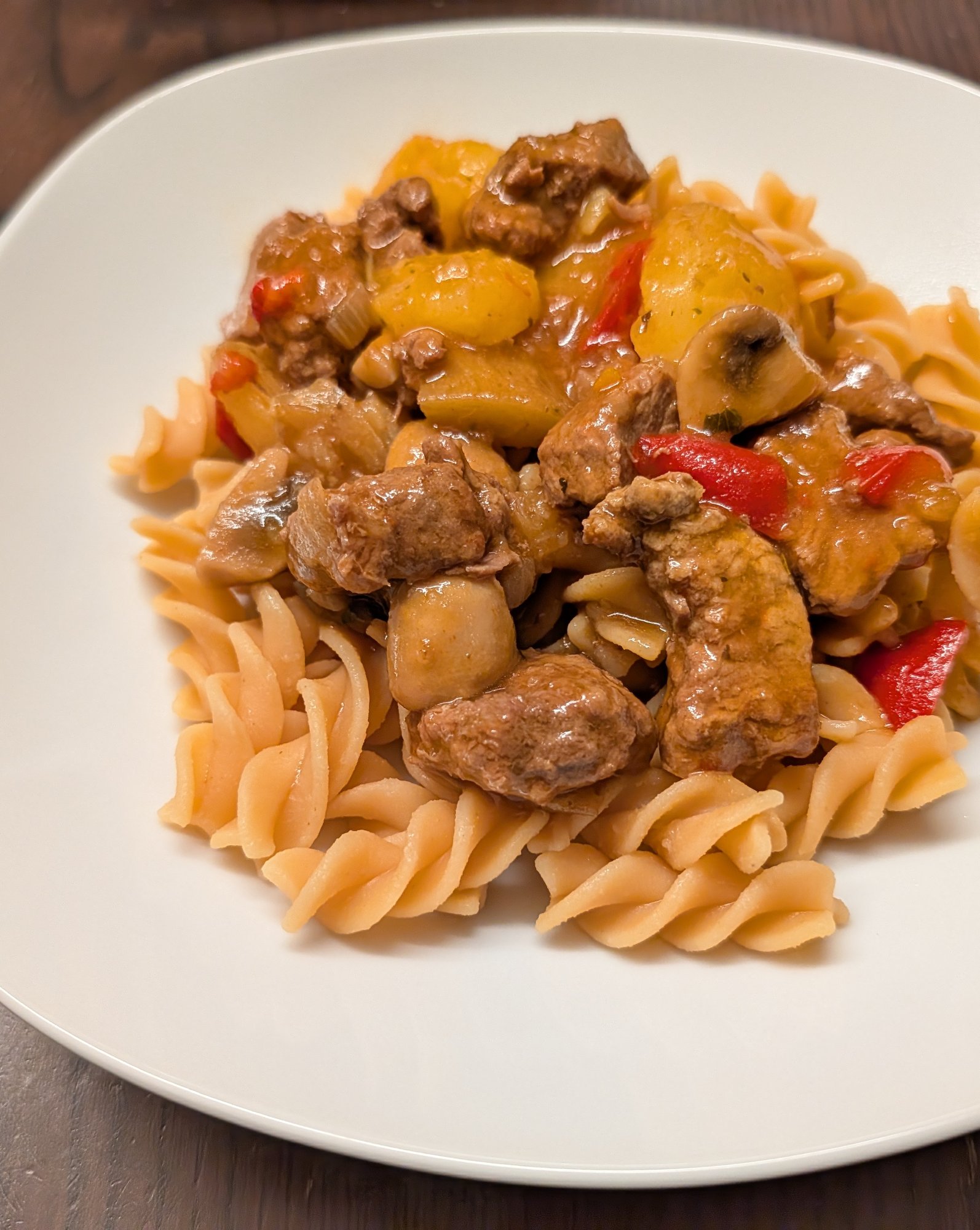
- Serve. Spoon the goulash over the pasta and garnish with fresh parsley, if you like. Serve immediately.
Notes
To keep it gluten-free, the beef broth must be certified gluten-free (the original recipe says so). Also check the labels on stock cubes, tomato paste, sweet and smoked paprika, caraway and marjoram or spice blends, the red wine, the lard (if you use it), cayenne or chili flakes, and the cornstarch.
Thickener: use cornstarch (corn flour in UK terms), not wheat starch. Wheat starch is a different product and some starches are made from wheat, so check that the cornstarch is labeled gluten-free.
Cross-contamination: use a clean pot, lid sealing ring, spoons and board, especially if you also cook with gluten.
Potatoes: cut them into larger chunks (about 1.5 inches, 4 cm). If they are too small, they will disintegrate during the 30-minute pressure cook cycle.
Spice level: if you like it spicy, add ½ tsp (2.5 ml) of cayenne pepper or chili flakes.
Options: olive oil or lard for sautéing; dry red wine or extra beef broth; marjoram or thyme; the smoked paprika is optional, for depth.
The 'Burn' message: deglazing in step 3 and scraping up all the browned bits from the bottom of the pot prevents it.
Storage: this stew tastes even better the next day. Keep it in an airtight container in the fridge for up to 3 days or freeze it for up to 3 months.
Nutrition values are an estimate calculated from the ingredient list, not a lab analysis. They cover the stew only (1/5 of the batch), without pasta and parsley. The 400 g of dry pasta (about 1,420 kcal for the batch, about 284 kcal per serving at 5 servings) is a typical value of about 355 kcal per 100 g for corn and rice based gluten-free pasta, not taken from the package label, and is NOT included in the figures above.
Pasta: the batch is served on 400 g of Barilla gluten-free penne, cooked per the package directions. Use a separate pot of fresh water and a clean colander, and check the package label, even though the pasta is sold as gluten-free.