Ingredients
Method
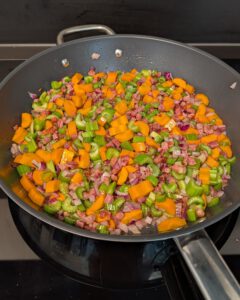
- Make the soffritto: heat the olive oil in a large, heavy pot or wide pan. Add the diced pork belly and render it until the fat melts. Add the onion, carrot and celery, cut small as you like, and cook gently over medium heat until soft.
- Add the beef: put the coarsely ground beef into the pot. Turn up the heat and sear it firmly until it is well browned and all the water has evaporated.
- Deglaze: pour in the wine and let it reduce gently until the smell of alcohol has completely gone.
- Add the tomatoes and simmer: stir in the passata and tomato paste and mix well. Cover the pot and cook on the lowest heat so that it only bubbles lightly.
- Simmer and add broth: let the ragù simmer for at least 2 to 3 hours. Stir regularly and add the broth a little at a time whenever the sauce reduces too much.
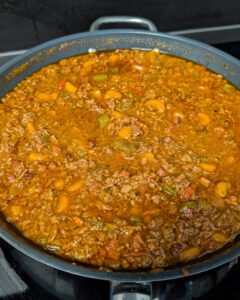
- Finish (optional): about 30 minutes before the end, stir in the milk to soften the acidity of the tomatoes. Season with salt and pepper, and a little nutmeg if you like.
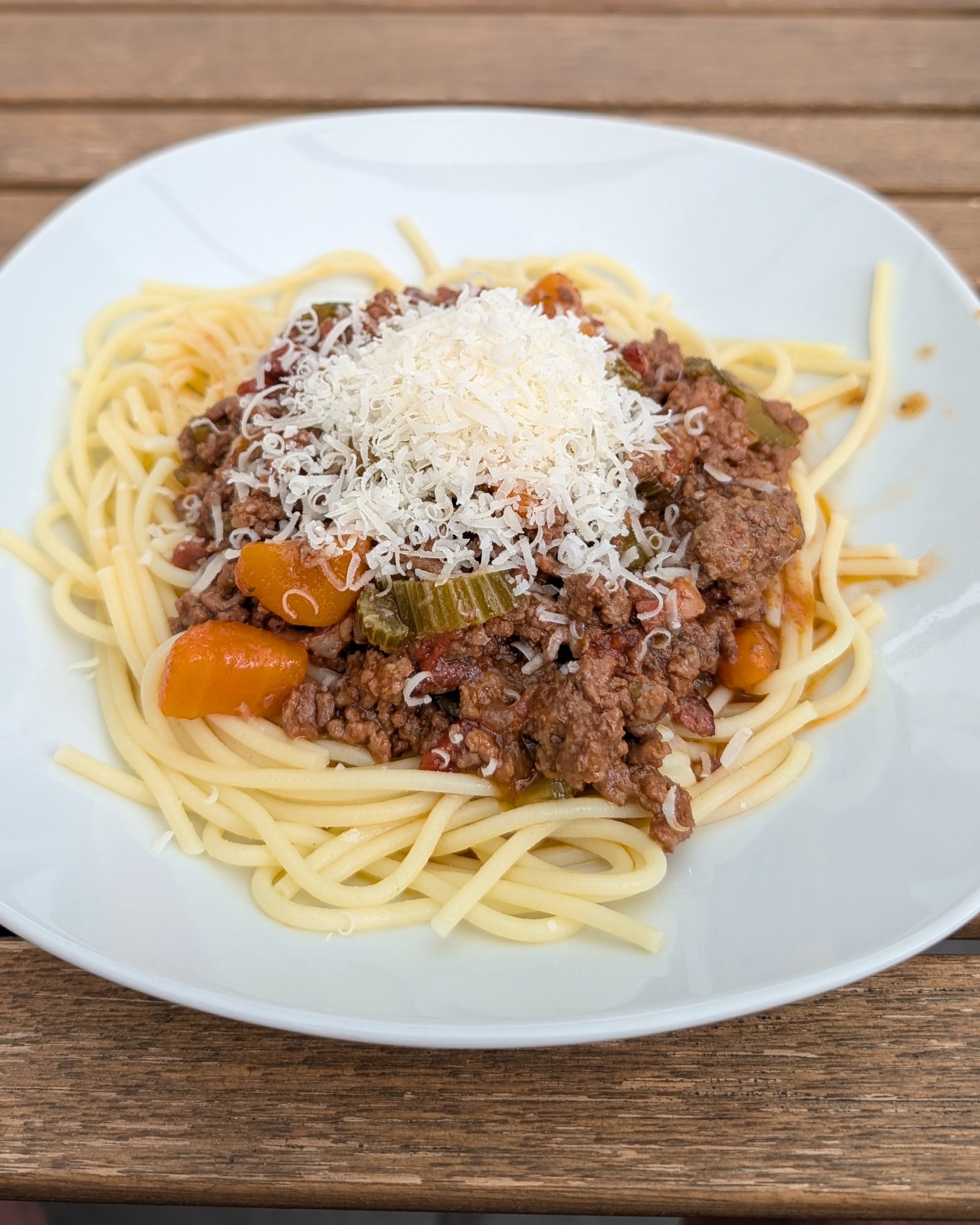
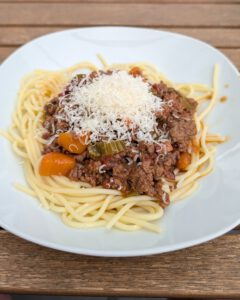
- To serve: cook the gluten-free spaghetti in plenty of salted boiling water, following the package directions. Gluten-free pasta needs more water than regular pasta. Start checking at 10 minutes, every 30 seconds, and drain it the moment it is al dente: the right moment is easy to miss. Serve topped with the ragù and freshly grated Parmesan.
Notes
No garlic and no herbs: that is how the official recipe is written.
Ribbon pasta such as tagliatelle is a classic pairing for ragù. The photo shows Barilla gluten-free spaghetti.
To keep it gluten-free, check the labels on the broth, tomato paste, passata, pancetta and the Parmesan, and use gluten-free pasta.
Nutrition values are an estimate calculated from the ingredient list (sauce only, including the optional milk, without pasta or Parmesan), not a lab analysis.
Cross-contact: use a clean pot, a separate colander and fresh pasta water; do not reuse water, colander or utensils from regular pasta.