
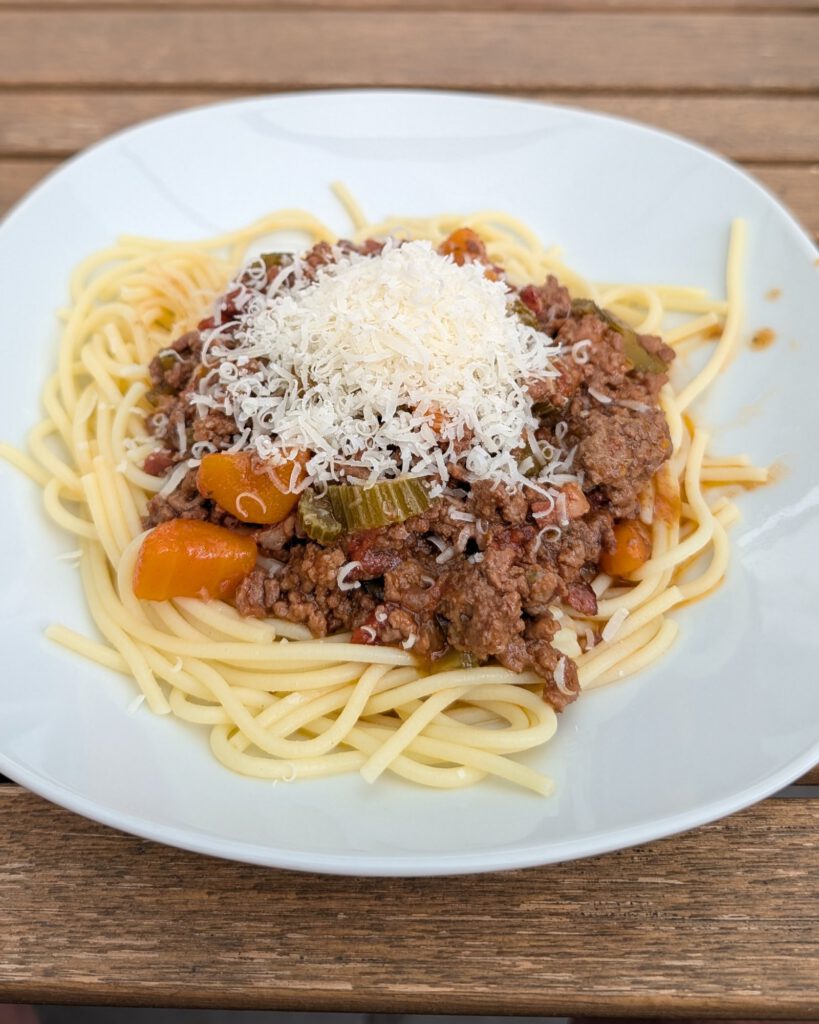
*Per serving, sauce only, estimate. Serves 8.
This is our gluten-free serving of the updated (2023) Ragù alla Bolognese of the Accademia Italiana della Cucina, scaled to 500 g (1.1 lb) of beef. The original recipe serves 6 with 400 g of beef, and every amount here is multiplied by 1.25.
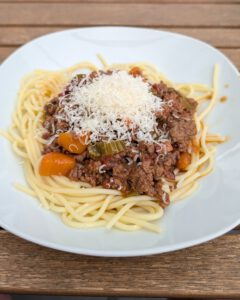
It is a very traditional version: no garlic and no herbs. Olive oil often replaces butter, and the milk is optional. What you get is a slow-simmered sauce built on a soffritto of small-cut vegetables, browned beef and pancetta, wine and tomato. Served with gluten-free pasta, and with the labels of broth, tomato paste, passata, pancetta and the Parmesan checked, the whole plate is gluten-free.
Based on the official recipe of the Accademia Italiana della Cucina (2023 version). This is our own wording, scaled from 6 servings.
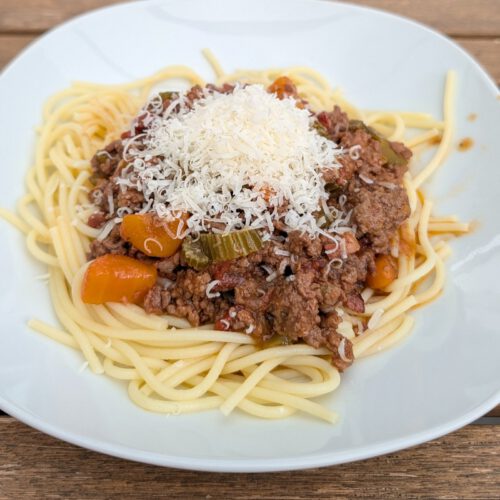
Authentic Gluten-Free Ragù alla Bolognese (Based on the Official 2023 Recipe)
As an Amazon Associate, I earn from qualifying purchases.
Ingredients
- 500 g coarsely ground beef 1.1 lb. Preferably marbled cuts such as shoulder, brisket or belly
- 190 g fresh pork belly (pancetta fresca) 6.7 oz, cut into fine cubes or strips
- 75 g onions 2.6 oz, cut small, as you like
- 75 g carrots 2.6 oz, cut small, as you like
- 75 g celery stalks 2.6 oz, cut small, as you like
- 190 ml wine, red or white about ¾ cup, roughly 1.25 glasses
- 250 g passata (strained tomatoes) about 1 cup
- 1.25 tbsp double-concentrated tomato paste
- 190 ml whole milk optional, about ¾ cup. Declared optional in 2023, but it helps make the meat tender
- 3.75 tbsp extra virgin olive oil the 2023 version often uses olive oil instead of butter
- 0.5 to 0.75 l light meat or vegetable broth 2 to 3 cups, for topping up
- salt and black pepper to taste
- freshly grated nutmeg optional, a pinch is allowed
- Barilla gluten-free spaghetti, to serve Check your pack for the size. Gluten-free tagliatelle works too
- Parmesan (Parmigiano Reggiano), freshly grated, to serve check the label: pre-grated cheese can contain anti-caking agents
Instructions
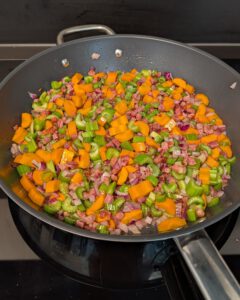
- Make the soffritto: heat the olive oil in a large, heavy pot or wide pan. Add the diced pork belly and render it until the fat melts. Add the onion, carrot and celery, cut small as you like, and cook gently over medium heat until soft.
- Add the beef: put the coarsely ground beef into the pot. Turn up the heat and sear it firmly until it is well browned and all the water has evaporated.
- Deglaze: pour in the wine and let it reduce gently until the smell of alcohol has completely gone.
- Add the tomatoes and simmer: stir in the passata and tomato paste and mix well. Cover the pot and cook on the lowest heat so that it only bubbles lightly.
- Simmer and add broth: let the ragù simmer for at least 2 to 3 hours. Stir regularly and add the broth a little at a time whenever the sauce reduces too much.
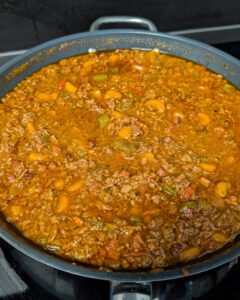
- Finish (optional): about 30 minutes before the end, stir in the milk to soften the acidity of the tomatoes. Season with salt and pepper, and a little nutmeg if you like.
- To serve: cook the gluten-free spaghetti in plenty of salted boiling water, following the package directions. Gluten-free pasta needs more water than regular pasta. Start checking at 10 minutes, every 30 seconds, and drain it the moment it is al dente: the right moment is easy to miss. Serve topped with the ragù and freshly grated Parmesan.
Notes
Questions about gluten-free Ragù alla Bolognese
Does authentic Ragù alla Bolognese contain garlic or herbs?
Not in this official recipe. The 2023 Accademia Italiana della Cucina version explicitly leaves out garlic and herbs.
Do you put milk in Ragù alla Bolognese?
In the 2023 version milk is optional. It helps make the meat tender and softens the acidity of the tomatoes. Stir it in about 30 minutes before the end.
How long should Ragù alla Bolognese simmer?
At least 2 to 3 hours on the lowest heat, stirring regularly and adding broth whenever the sauce reduces too much.
Is Ragù alla Bolognese gluten-free?
The sauce is made from ingredients that are naturally free of gluten. Check the labels on the broth, the tomato paste, the passata, the pancetta and the Parmesan, and serve it with gluten-free pasta such as the Barilla gluten-free spaghetti in the photo.