
*Per serving, estimate. Serves 4.
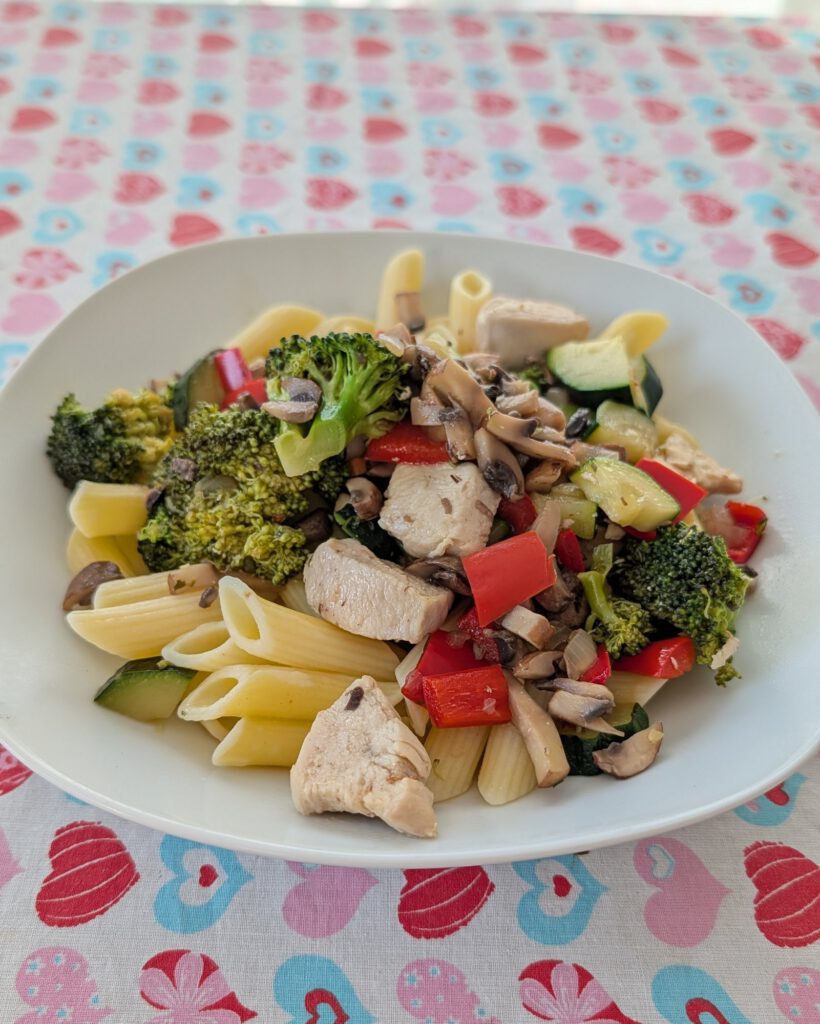
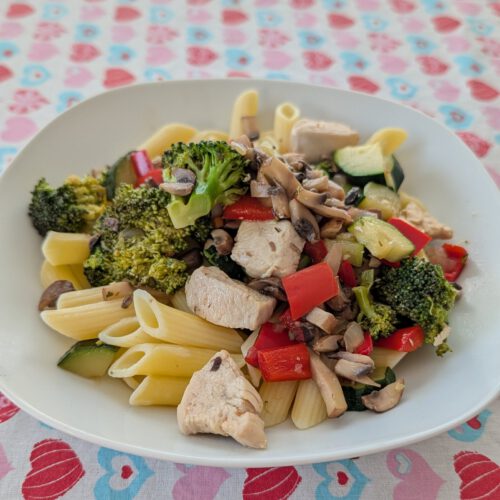
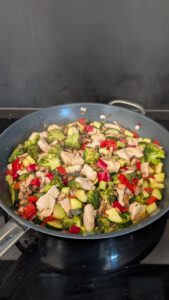
This gluten-free chicken vegetable pan is cooked in stages in one large pan: chicken breast, broccoli, pointed red peppers and zucchini are cooked in stages in one large frying pan or wok, with the pasta boiled separately and then combined with the pan.
The chicken is seared first and set aside so it stays tender, the vegetables follow, and fresh ginger, rock salt and turmeric finish the dish. A splash of verjus or coconut aminos is optional. Fold the drained pasta in or serve it on the side. Sliced mushrooms, cooked in a separate hot pan and stirred in at the end, are an option.
It is cooked in a low-histamine style, the owner’s approach: fresh ingredients and no fermented products in the base recipe. Histamine tolerance is individual, so see the FAQ below.
The dish is gluten-free only if every packaged item you use is: check the labels of the pasta, vegetable broth, coconut aminos, verjus, spices and any flavored or marinated chicken.
Gluten-Free Chicken and Vegetable Pan with Pasta
As an Amazon Associate, I earn from qualifying purchases.
Ingredients
- 500 g chicken breast fillet, cut into bite-size pieces about 1.1 lb. Very fresh from the butcher, or thawed right before cooking
- 2 pointed red peppers (such as Romano), cut into thin strips about 200 g (7 oz) in total. The original recipe gives no weight; 200 g is assumed
- 2 zucchini, cut into half slices about 400 g (14 oz) in total. The original recipe gives no weight; 400 g is assumed
- 1 head of broccoli, cut into small florets; stem peeled and finely diced about 350 g (12 oz) including the stem. The original recipe gives no weight; 350 g is assumed
- 250 g gluten-free pasta (for example rice pasta or corn-quinoa pasta) about 9 oz dry. The original recipe gives no amount; 250 g is assumed. Cook per package directions. Check that the label says gluten-free
- heat-stable oil (for example canola or mild olive oil) the original recipe gives no amount; add a little at a time
- fresh ginger, finely grated used in the dish; no exact amount was given, so add to taste (‘a little’)
- turmeric used in the dish; no exact amount was given, so add to taste (‘a little’). Check the label
- rock salt or sea salt, without additives to taste
- 2 to 3 tbsp water 30 to 45 ml. Optional: to steam the broccoli. The original recipe also mentions a splash of water or yeast-free homemade vegetable broth as a liquid; check the label of any broth
- a splash of verjus optional, to taste. No amount in the original recipe. Check the label
- coconut aminos optional, to taste. No amount in the original recipe. Check the label
- sweet paprika powder optional pinch. Check the label
- fresh mushrooms (white button), sliced optional. The original recipe gives no amount. Cooked in a separate very hot pan with a little oil, then stirred into the finished pan, see the notes
Instructions
- Cut the chicken. Cut the chicken breast into bite-size pieces.
- Prep the vegetables. Wash the vegetables well. Cut the pointed peppers into thin strips and the zucchini into half slices. Divide the broccoli into small florets.
- Use the stem. Peel the broccoli stem and cut it into fine cubes. The owner says it tastes similar to kohlrabi.
- Start the pasta. Bring water to a boil for the gluten-free pasta and cook it per package directions until al dente (firm to the bite).
- Sear the chicken. Heat a little oil in a large frying pan or wok. Sear the chicken over high heat until cooked through but still juicy.
- Set the chicken aside. Take the chicken out of the pan and keep it on a plate for a moment. This keeps it tender.
- Cook broccoli and pepper. Add a little more oil to the pan if needed. Cook the broccoli florets and pepper strips for 4 to 5 minutes. If you like, add 2 to 3 tbsp (30 to 45 ml) of water so the broccoli steams.
- Add the zucchini. Add the zucchini slices and cook for about 3 more minutes, until the vegetables are crisp-tender.
- Add the chicken back. Return the seared chicken to the pan together with the juices that collected on the plate.
- Season. Grate fresh ginger into the pan. Season with rock salt and turmeric, and optionally verjus or coconut aminos. Taste and adjust.
- Optional mushrooms. Slice the mushrooms and cook them in a separate, small, very hot pan with a little oil for 4 to 5 minutes, so they brown instead of stewing. Salt them only at the very end. Stir them into the pan with the chicken and vegetables just before the pasta goes in.
- Combine with the pasta. Fold the drained gluten-free pasta straight into the pan, or serve it on the side.
Notes
Questions about the chicken and vegetable pan
Why is the chicken set aside after searing?
The chicken is seared until cooked through but still juicy, then set aside on a plate while the vegetables cook. The original recipe says this keeps it tender. It goes back into the pan with its juices at the end.
How do I keep the broccoli crisp?
Cut the florets small and cook them for 4 to 5 minutes together with the pepper. If you like, add 2 to 3 tbsp (30 to 45 ml) of water so the broccoli steams. Add the zucchini afterwards and stop when everything is crisp-tender.
Why are the mushrooms cooked in a separate pan?
Mushrooms release water quickly. In a small, very hot pan with a little oil they sear and turn golden brown instead of simmering in the vegetable pan. Salt them only at the very end. Cooking them separately also lets you portion them for people who tolerate mushrooms differently. Then stir them into the finished pan with the chicken and pasta. If you prefer one pan, see the editor’s suggestion in the notes.
Can I serve the pasta on the side?
Yes. You can fold the drained gluten-free pasta straight into the pan or serve it on the side, as the original recipe describes.
Is this chicken and vegetable pan low histamine?
It is written in a low-histamine style of cooking: fresh chicken and fresh vegetables, and no fermented, cured, tomato-based or aged ingredients in the base recipe. Histamine tolerance is individual and food lists differ, for example on mushrooms, so check what works for you. Two optional ingredients deserve a second look: mushrooms, and coconut aminos. Coconut aminos is made from fermented coconut sap, which sits awkwardly with the owner’s tip to avoid fermented products. Under a strict approach, verjus or just salt is the safer choice; the original recipe offers coconut aminos only as an option. Freshness matters most: eat the pan soon and do not keep leftovers for long. This is not medical advice; talk to a doctor or dietitian about your own needs.