
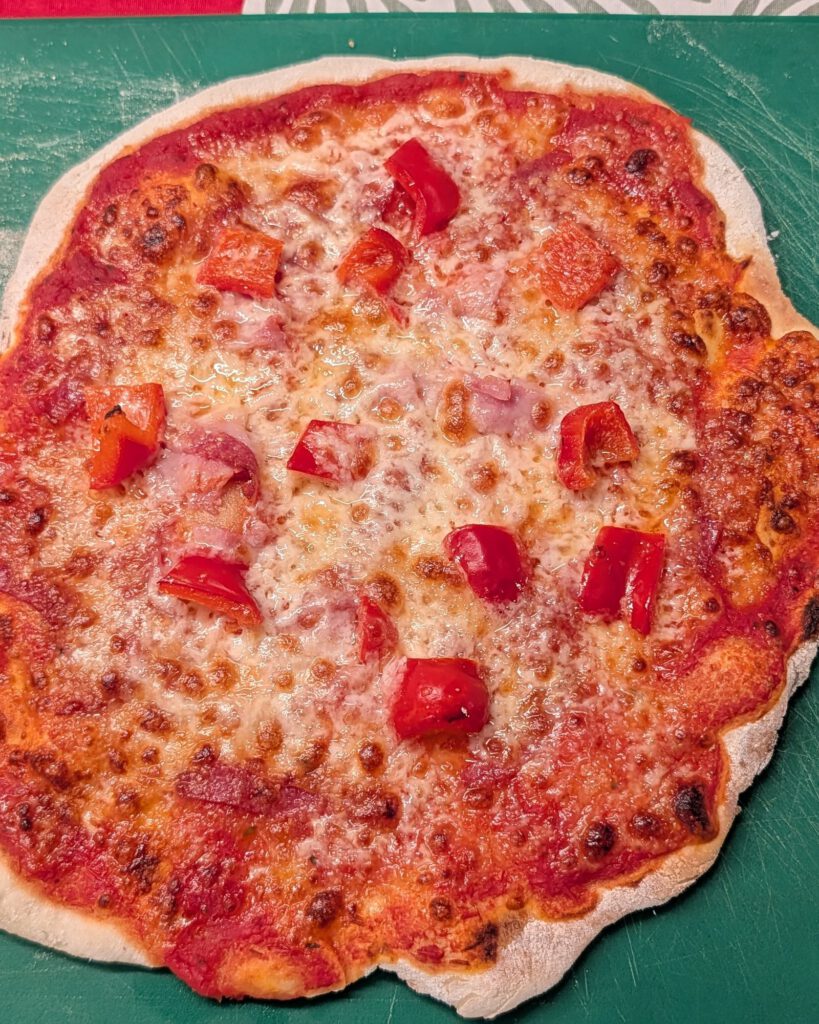
*Per pizza, estimate. Makes 4 pizzas.
It is 6:00 PM, your stomach is growling at a volume that violates local noise ordinances, you eat gluten-free, and waiting two hours for yeast dough to rise feels like a personal insult. Welcome to the Emergency Hangry Pizza Protocol, built around a gluten-free no-rise pizza dough.
Schär Mix B, plain yogurt, olive oil and lukewarm water come together in minutes. The yogurt makes the inside tender, while the olive oil, a very thin roll and a hot oven give you a crisp, golden crust. A little yeast adds pizzeria flavor, and a dough ball saved in the fridge ferments slowly overnight and may turn out airier the next day. The 15 minutes are the hands-on time for mixing, portioning and rolling. With preheating and baking, plan on about 40 minutes in a home oven until the pizza is on the table.
Top it with our house favorites: red bell pepper, salami, ham and, against every Italian rule, pineapple. If an Italian Nonna asks, close the curtains and deny everything. Just shine: a super quick recipe, and at our house everyone was stuffed and had a great rest of the evening.
15-Minute Gluten-Free No-Rise Pizza Dough with Yogurt
As an Amazon Associate, I earn from qualifying purchases.
Ingredients
- 500 g Schär Mix B (gluten-free bread flour) about 1.1 lb. Already contains plant fibers and binders
- 200 g plain yogurt about ¾ cup. Dairy or plant-based, straight from the tub
- 225 ml lukewarm water about 1 cup. Start with 200 ml and add the rest if needed
- 5 tbsp extra virgin olive oil 75 ml, about 68 g, plus a few extra drops for oiling hands and the fridge dough
- 1.5 tsp salt about 9 g
- ½ packet dry yeast about 1 tsp (3.5 g). Check the label
- 1 pinch sugar to wake up the yeast
- gluten-free flour for dusting (such as Schär Mix B) optional, for hands and rolling surface. Amount not given in the source
- 300 to 400 g passata or seasoned tomato pizza sauce about 1¼ to 1⅔ cups, 1 jar or can. Check the label
- 400 g mozzarella, shredded or fresh about 14 oz. Source says 2 to 3 packages without a pack size; about 100 g per pizza assumed (see open questions). Check the label
- 100 g salami slices about 3.5 oz, about 25 g per pizza as in the source nutrition figures. Check the label
- 120 g cooked ham, diced or sliced about 4.2 oz, about 30 g per pizza as in the source nutrition figures. Check the label
- 200 g red bell peppers, thinly sliced or diced about 7 oz, about 50 g per pizza as in the source nutrition figures
- pineapple tidbits house favorite, no amount in the source
- optional extra toppings optional: marinated artichoke hearts, black or green olives (pitted), sliced mushrooms, pepperoni, drained sardines or canned tuna, red or yellow onion rings, or whatever you like or have
Instructions
- Heat the oven first. Preheat to 230 °C (445 °F) top/bottom heat, or 210 °C (410 °F) fan, with a baking sheet or pizza stone inside. Give it 20 to 30 minutes so the surface is properly hot.
- Mix the dough. In a large bowl combine 500 g Schär Mix B, 1.5 tsp salt, a pinch of sugar and ½ packet dry yeast. Add 200 g yogurt and 5 tbsp (75 ml) olive oil. Pour in 200 ml lukewarm water and mix with a stand mixer (dough hooks) or your hands. Add the remaining 25 ml water gradually until you get a smooth, soft, non-crumbly dough ball. No rising time needed.
- Portion the dough. Shape it into one big round ball (about 1 kg in total). Cut it in half, then cut each half in half again: 4 dough balls of about 250 g each. No scale needed.
- Roll it thin. Place each dough ball on a board dusted with gluten-free flour (such as Schär Mix B). With lightly floured or oiled hands, or with a rolling pin, roll each ball out into a very thin crust, 2 to 3 mm thick, about 31 cm (12 in) across. The Ariete 909 measures 32 cm on the outside. Thin is the secret to a crispy base when you skip the rising.
- Top like a rebel. Spread a generous ladle of pizza sauce over each base, scatter on the mozzarella, then add red bell pepper, salami, cooked ham and the gloriously rebellious pineapple (or your optional toppings).
- Bake in the home oven. Slide the pizza onto the preheated pizza stone or baking sheet (a pizza stone gives the crispiest base) and bake for about 10 to 14 minutes. Ovens differ, so watch the first pizza closely: start checking after 9 minutes, then every minute, and take it out when it looks right to you, with bubbling cheese and golden edges. Slice and devour immediately.
- Variant: Ariete 909 electric pizza oven. This is what we used for the photographed pizzas: setting 3.75, about 4 minutes, no baking parchment. Pro tip: check after 3 minutes for the first pizzas, since every oven runs a bit differently.
- Optional bonus: bake 3 today, save 1 for tomorrow. Right after kneading, rub the 4th dough ball with 2 to 3 drops of olive oil so it does not dry out, seal it in an airtight container or zip-top bag and refrigerate overnight. Take it out 30 to 45 minutes before baking so it reaches room temperature, then roll, top and bake as above for a possibly fluffier, pizzeria-style crust.
Notes
Questions about gluten-free no-rise pizza dough
Can I really make gluten-free pizza dough without rising time or baking powder?
Yes. Roll the dough out thin (2 to 3 mm) and bake it on a preheated baking sheet. The high heat creates steam pockets, the yogurt keeps the crumb tender and the oil crisps the bottom.
Why add yeast if there is no rising time?
Yeast gives the crust a savory pizzeria flavor and aroma even without proofing. Any dough ball you keep in the fridge overnight may ferment slowly and turn out airier the next day.
Why does the dough need to warm up after being in the fridge?
Gluten-free starches and plant fibers firm up when cold. Letting refrigerated dough sit on the counter for 30 to 45 minutes softens it so you can roll it out without cracking.